Qovelyra
Neon Blueprint
Neon Blueprint
Couldn't load pickup availability
1. The Shape Behind the Image
A striking design rarely begins with a random instruction. Learners often have an idea in mind, but the structure behind that idea may remain vague. When the subject, mood, layout, and visual logic are not defined, the final result can feel disconnected from the original concept. This can make it difficult to repeat a visual direction or explain why a certain image works better than another. Neon Blueprint addresses this by helping learners create a more detailed plan before moving into visual exploration.
2. A Brighter Plan for Visual Direction
Neon Blueprint teaches learners how to turn an early creative idea into a structured design brief. The course looks at concept framing, visual references, prompt architecture, and review notes as connected parts of one workflow. Each lesson encourages learners to slow down, observe carefully, and make design choices with purpose. The course also introduces comparison tasks that help learners study differences between several creative directions. By the end, learners have a practical planning method they can apply to future AI for Design exercises.
3. What’s Inside
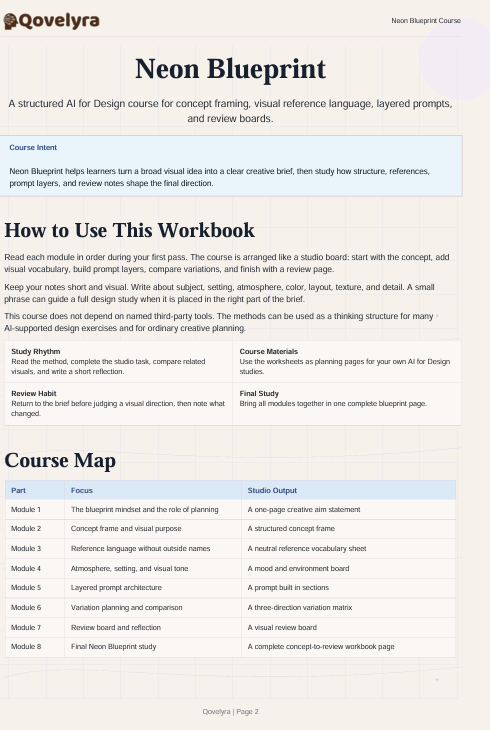
The course begins with a module on concept framing. Learners define the subject, setting, emotional tone, visual category, and intended use of a design study. This first stage helps separate vague inspiration from a workable creative direction.
The second module introduces visual reference language without naming specific third-party tools or platforms. Learners study how to describe era, atmosphere, material qualities, lighting style, spatial depth, color direction, and overall composition. The focus is on building a useful vocabulary for design communication.
A detailed prompt architecture section follows. It breaks a design instruction into layers: core subject, environment, visual treatment, composition, details, exclusions, and variation notes. Learners practice building prompts from simple to more detailed versions while observing how each added layer changes the outcome.
The course also includes a visual review board template. This template guides learners through layout analysis, color observation, focal point review, texture notes, and consistency checks. Learners are invited to compare three to five variations of the same concept and identify what supports the original brief.
The final assignment is a guided “blueprint study.” Learners choose a theme, complete a concept sheet, write a structured prompt, create several variations, and prepare a short visual review. Supporting worksheets include a concept planner, prompt-layer guide, review board, and reflection sheet.
4. Who Is This For?
Neon Blueprint is intended for learners who want a more developed planning process for AI-supported design. It suits design students, creative freelancers, visual content makers, and anyone who wants to move beyond casual experimentation into more organized creative study.
5. What You’ll Learn
- How to turn a broad idea into a structured creative brief
- How to describe visual references through neutral design language
- How to build layered prompts for stronger direction
- How to guide composition, lighting, texture, and mood with detail
- How to compare several visual outcomes using a review board
- How to prepare a complete design study from concept to reflection
6. 30-Day Refund Terms
Refund requests may be submitted within 30 calendar days of purchase, subject to the store’s published refund conditions. The request should include the order information needed for review. Refund timing may vary depending on the original payment method and payment provider. This section should be used only when it matches the active Qovelyra refund policy.
Self-paced learning overview
- 📁 Digital file available after purchase
- ♾️ Long-term availability
- 🔒 Secure checkout
- 🗓️ Content updated in 2026
How are the courses structured?
How are the courses structured?
Each tariff follows a clear sequence of modules, guided explanations, visual examples, and practice tasks. Learners can move through the materials in order and revisit earlier topics when they wish.
Who are the courses intended for?
Who are the courses intended for?
The course collection is intended for curious beginners, developing designers, and creative learners who want to explore AI-supported design methods. No prior technical background is required unless a course page states otherwise.
What will I receive after enrollment?
What will I receive after enrollment?
You will receive the lessons, modules, worksheets, prompts, and supporting materials listed on the selected course page. The contents vary by tariff, so each description outlines the exact learning scope.
Share